

From the beginning, Emily Weiss’s path was defined by observation, curiosity, and relentless drive. Her story begins long before Glossier became a household name; it starts with a passion for fashion, beauty, and people.
Weiss’s first experience in the fashion world came early. Thanks to a neighbor she babysat for, she landed an internship at Ralph Lauren when she was just 15 years old. That experience gave her an early sense of professional hustle and worth.
After studying art at New York University, Weiss walked the corridors of Teen Vogue and Vogue as a fashion assistant, absorbing industry rhythms and uncovering a pattern: nobody was talking to real consumers about real beauty needs. That insight sparked an idea.
Into The Gloss: The Blog That Started It All
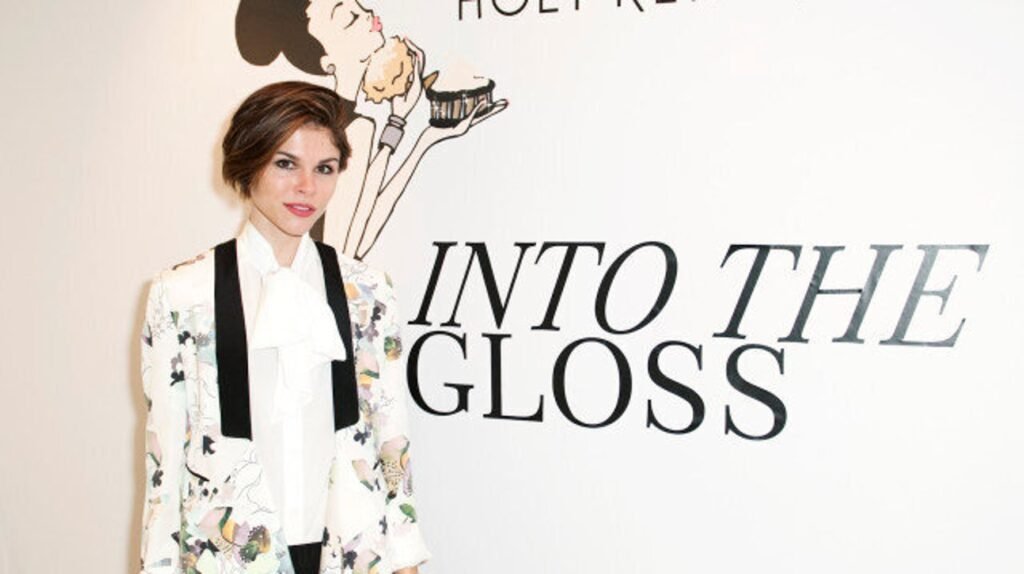
In 2010, while still working at Vogue, Weiss launched Into The Gloss, a beauty blog featuring interviews with women from all walks of life, from models to editors, capturing their personal beauty routines and tips.
The blog’s authentic tone and its Top Shelf series, where Weiss photographed and discussed real people’s beauty cabinets, resonated. By early 2012, the blog was attracting hundreds of thousands of monthly readers, and over time, that number grew into the millions.
But Weiss didn’t just treat the blog as content; she treated it as community intelligence. The conversations she had with readers and subjects became a focus group of millennial preferences long before that was a mainstream strategy.
Turning Insight Into a Brand
By 2014, Weiss had identified a clear gap: women liked individual beauty products, but no brand felt like them. “There wasn’t one brand that really spoke to girls like me, who created products for real life,” she said about starting Glossier.

She planned to launch Glossier with just four products, a skin mist, a balm, a moisturizer, and a skin tint, products designed to enhance.
But raising money proved tough. Of the 12 venture capital firms she pitched, 11 reportedly turned her down, leaving her facing rejection after rejection from investors who didn’t yet see the potential of a community-driven beauty brand. Despite these setbacks, Weiss didn’t give up. She eventually secured $2 million in seed funding from Forerunner Ventures, led by Kirsten Green, along with support from investors including Lerer Hippeau Ventures. With that funding, she built Glossier from the ground up, creating a website, hiring a chemist to develop the first products, setting up office space, and assembling a small team, leading to the official launch of Glossier in October 2014.
A New Model of Brand Building
Glossier didn’t rely on celebrity endorsements or traditional advertising. Instead it leveraged the blog Into The Gloss as a real time focus group, engaged its audience on social media before product launch, used minimalism and inclusive storytelling in both design and marketing, and built a culture of fans, customers, and evangelists who felt personally connected.
The approach worked. By 2019, with multiple rounds of funding, including $100 million Series D led by Sequoia Capital, Glossier’s valuation soared above $1.2 billion, turning it into a unicorn. Weiss secured over $266 million dollars in total venture capital funding across multiple rounds, leading to a peak valuation of $1.8 billion in 2021, cementing Glossier’s position as one of the most influential beauty brands of the decade.
Entrepreneurial Lessons from Emily Weiss
What can entrepreneurs learn from Emily Weiss’s journey? Here are key takeaways grounded in her story:
1. Start with a real problem the market feels, not just sees. Weiss didn’t create a beauty company because beauty was big; she created one because the existing industry wasn’t answering consumers’ real needs.
2. Build community before you build products. Into The Gloss wasn’t just a blog; it was a feedback machine. Understanding her audience and involving them in the brand story gave her a built in customer base before products hit shelves.
3. Embrace rejection as part of the journey. Most investors didn’t see Glossier’s vision at first. Weiss used those rejections to refine her pitch, her positioning, and her confidence; perseverance mattered as much as the idea itself.
4. Know your market better than anyone else. Emily’s success came from listening more than declaring. Her blog’s editorial insights became product strategy insights, a powerful advantage for any founder.
5. Use authenticity as a strategic asset. Glossier’s voice, real, inclusive, and consumer centric, was a competitive edge. It differentiated the brand in an industry used to overt glamour and illusion.
6. Be agile and willing to learn on the job. Weiss didn’t start with an MBA or a beauty background. She learned by doing, iterating with her community and adapting as the company scaled.
Emily Weiss’s path from intern to founder is a reminder that entrepreneurship is not about overnight success but lesson by lesson growth. She turned insight into innovation, community into commerce, and a blog into a billion dollar brand.
The Brief Network: Inspiring Stories and Empowering Lessons.