

Every morning across Lagos, millions of professionals brace for the same ordeal. Not the work waiting at the office, but the journey to get there. The gridlocked bridges, the danfo buses stuffed past capacity, and the uncertainty of whether you will arrive at the office on time. For most people, this is simply the price of living in one of Africa’s most busiest cities. For Damilola Olokesusi, it became a problem worth solving.
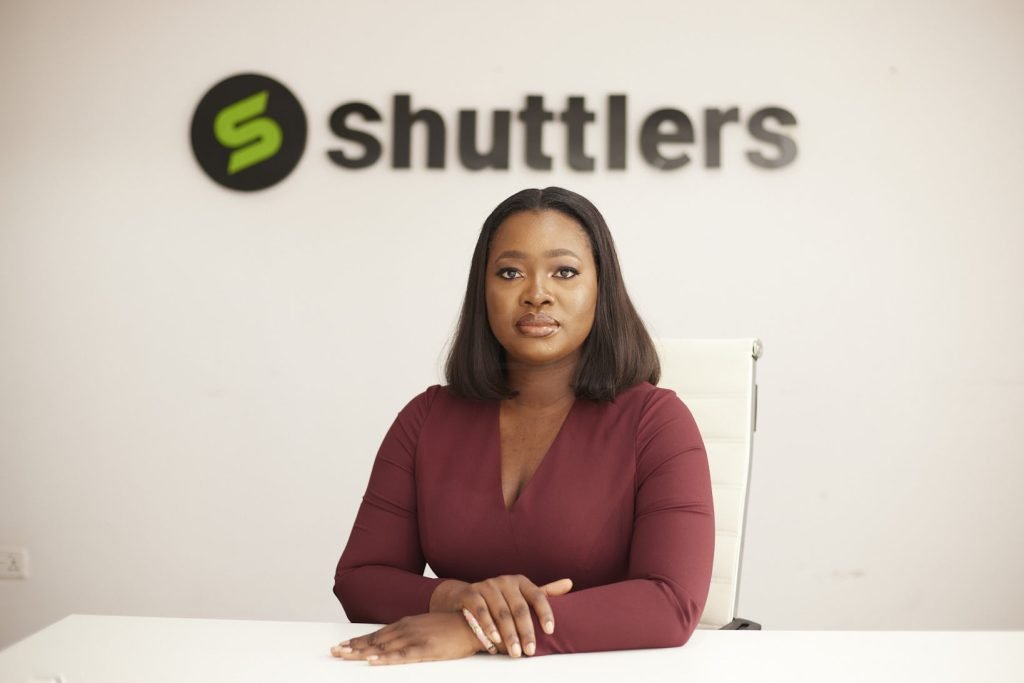
Olokesusi is the co-founder and CEO of Shuttlers, a technology-driven ride-sharing company reshaping how working professionals commute in metropolitan cities like Lagos. What started as a personal frustration with public transportation has grown into one of Nigeria’s most recognized mobility startups, one that has clocked over 3 million trips, expanded across Lagos and Abuja, and raised a combined $5.6 million in funding.
Damilola grew up in Ibadan and studied Chemical Engineering at the University of Lagos, with hopes of working with energy giants like Shell or Mobil. Her exposure to entrepreneurship came during a lengthy university strike in 2009 while she was studying at UNILAG. She used that period to learn new things and began to question so much happening around her, unconsciously looking for problems to solve.
After graduating, she worked as a trainee engineer at Marine Professionals Ltd. and as an intern at Pan Ocean Oil Corporation. She later interned at Asset and Resource Management Company (ARM) before joining the Global Shapers Community as Vice Curator of the Lagos hub. These experiences gave her a close look at how systems functioned in practice. The one that failed most visibly was public transportation in Lagos.
The decision to build Shuttlers did not come from a business plan. It came from fear. One of Damilola’s sisters boarded what appeared to be a regular commercial bus on her way to work, only to find herself in a “one-chance” vehicle, the term Lagosians use for buses operated by armed robbers using public transit as cover. The passengers were taken to another location, robbed, and held against their will.
That incident, combined with the daily grind of Lagos commuting, pushed her toward an idea she had been carrying. During her internship years, she noticed that large corporations ran dedicated staff buses for their employees. She kept asking herself why that same option was not available to smaller companies and everyday commuters. That question, sharpened by her sister’s ordeal, became the seed of Shuttlers. Her family pushed back hard. Her mother was convinced she was throwing away a hard-earned degree on the wrong bet in the wrong country. Damilola moved forward anyway.
Shuttlers was founded in 2015 alongside Damilola Quadry and Busola Majekodunmi. The three women put their savings together and officially launched in October 2016. There was no app in those early days. Customers booked rides through WhatsApp, email, and Slack, receiving route details and schedules through those same channels. One of their first corporate clients was Andela, which used the service to transport its staff across Lagos. It was enough proof that the model worked.
In 2019, Shuttlers launched a dedicated mobile app. Passengers could subscribe to a plan, book seats in advance, and track their bus in real time. The service ran on fixed pricing with no surge charges during rush hour or bad weather, making it a more predictable and affordable option than conventional ride-hailing. Not long after, the founding team began to change. Damilola Quadry had returned to the United States in 2016. Busola Majekodunmi later stepped back to concentrate on a nonprofit education venture. Damilola Olokesusi was the last co-founder standing.
She kept building. Commuters could book seats on fixed routes at prices between 60 and 80 percent lower than ride-hailing services, riding in air-conditioned buses with trackable arrival times. Each bus on the road displaced as many as 14 to 29 private cars, quietly cutting congestion and emissions across a city that carries more than its share of both.
In 2020, Damilola partnered with Ford Motor Company and the Global Water Challenge to launch She Moves Shuttles, an all-female shuttle service built around the safety concerns women face on Lagos roads daily. The initiative also turned commute time into learning time, connecting passengers with online courses and peer networks. More than 600 female professionals have benefited from it.
For its first five years, Shuttlers was entirely bootstrapped. By the time the company closed a $1.6 million seed round in November 2021, led by VestedWorld, it was already generating consistent revenue. That discipline carried into the next raise. In April 2023, Shuttlers secured a further $4 million Series A led by Verod-Kepple Africa Ventures, bringing total funding to $5.6 million. Between those two rounds, the fleet grew by 150 percent, route coverage expanded 25 times over, and daily passenger numbers rose by 280 percent.
Recognition followed the results. Damilola was named to the Forbes Africa 30 Under 30 list in the Technology category in 2019, received the Digital and Tech Award at the Women in Africa Contest in Morocco, and won the Best Idea Award at the Aso Villa Demo Day. In 2020, the UK government selected her for a technology exchange programme. Two years later, Vulog named her one of the Most Influential Women in Mobility globally. She also serves as UNCTAD’s eTrade for Women Advocate for Anglophone Africa.
What We Can Learn
Damilola’s story carries a thread that any founder can follow. She solved a problem she lived personally, started without perfect conditions, and built revenue before she built a pitch deck. She watched her co-founders leave and kept going. She endured family resistance, five years of bootstrapping, and the unpredictability of doing business in Nigeria without losing sight of what she was building. The lesson underneath all of it is straightforward: clarity about the problem, and the stubbornness to stay with it, will take you further than the best circumstances ever could.
The Brief Network: Inspiring Stories and Empowering.