

For centuries, hair braiding has been more than a hairstyle. It is culture, identity, artistry, and tradition woven through generations across Africa and its diaspora.
Yet despite its cultural significance, the process has remained remarkably unchanged. It still demands hours of patience from clients, years of physical endurance from stylists, and countless hours of repetitive work that most people simply accept as part of the experience.
Yinka Ogunbiyi didn’t.
While attempting to braid her own hair for the first time during the COVID-19 lockdown, the Nigerian engineer spent four days completing the process. Instead of accepting the experience as inevitable, she asked a question that would reshape her career:
Why had no one engineered a better way to braid hair?
Today, that question has become HaloBraid, a robotics startup that has secured $7 million in seed funding and is working to modernize one of the world’s oldest beauty practices.
From Frustration to Innovation
Ogunbiyi had spent most of her life in braiding chairs, just like millions of women across Africa and its diaspora. Long appointments were simply part of life.
But her engineering background meant she looked at problems differently. With a Master’s degree in engineering, an MBA from Harvard University, and experience building a smart cooking appliance company, Ogunbiyi recognized braiding as an overlooked engineering challenge rather than an unavoidable routine.
That realization became the foundation of Halo.
The Opportunity Everyone Overlooked
Turning the idea into reality proved far more difficult than identifying the problem.

Ogunbiyi partnered with fellow Nigerian and Harvard graduate David Afolabi, and together they spent 18 months developing more than 450 prototypes while completing thousands of test braids, including on Ogunbiyi’s own hair. Along the way, they discovered that hair is one of the most difficult materials to manipulate mechanically, forcing the team to borrow techniques from disciplines ranging from materials science to inkjet printing before finally developing a device capable of handling textured hair safely and consistently.
The result was HaloBraid.
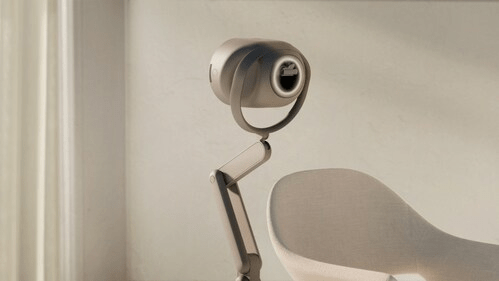
Rather than replacing professional braiders, the device works alongside them. Stylists begin each braid by hand, preserving their technique and artistry, while HaloBraid completes the repetitive length of the braid, reducing physical strain and helping complete the process up to five times faster.
As the team continued researching the industry, they realized they weren’t solving a niche problem, they had uncovered a massive global opportunity. Halo estimates that people collectively spend more than 8 billion hours braiding hair every year, while a survey of over 2,000 people found that 95 percent would braid their hair more often if the process simply took less time.
The burden extends beyond clients. Years of repetitive hand movements leave many professional braiders vulnerable to conditions such as carpal tunnel syndrome and arthritis. For decades, these challenges were accepted as an unavoidable part of the profession.
Ogunbiyi saw something different. Where others saw a centuries-old tradition, she saw an opportunity to improve the experience for both stylists and clients without compromising the artistry of braiding.
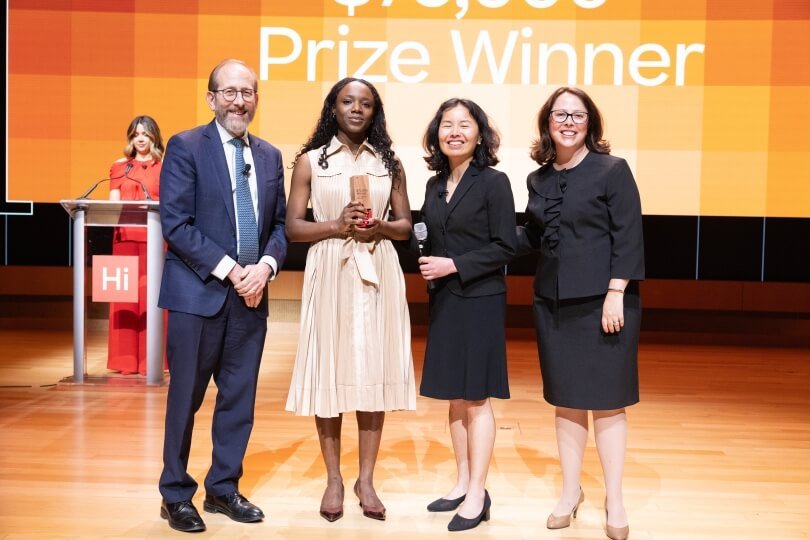
That opportunity was becoming increasingly difficult to ignore. In 2025, Halo won the Harvard President’s Innovation Challenge, earning $75,000 in non-dilutive funding and validating the company’s vision. The momentum continued when the startup secured $7 million in seed funding, led by Seven Seven Six, with participation from AlleyCorp and Bling Capital. The investment will accelerate product development, expand manufacturing, and prepare HaloBraid for its commercial launch.
Building More Than a Product
For Ogunbiyi, HaloBraid is not the destination. It is the first step toward reimagining how textured hair is cared for, without replacing the skilled professionals whose creativity remains at the heart of the industry.

Her team is already developing technology capable of undoing braids, a process that often takes nearly as long as installing them.
The broader ambition is to build a complete technology platform for textured hair, a market serving hundreds of millions of people globally but one that has received relatively little engineering attention.
The Takeaway
Yinka Ogunbiyi’s story is a reminder that some of the world’s greatest business opportunities are often hidden inside everyday routines that people have stopped questioning.
She looked at a problem millions of people had accepted for generations, applied engineering to it, and built a solution that attracted millions of dollars in investment.
Sometimes, changing the future starts by asking one simple question: “Why does it still have to be done this way?”
The Brief Network: Inspiring Stories and Empowering Lessons.


Great content! Keep up the good work!