

Greatness is often assumed to start with opportunity. Viola Davis‘s life says otherwise. Hers started with resilience, with the decision to keep moving when everything around her suggested she should stop.
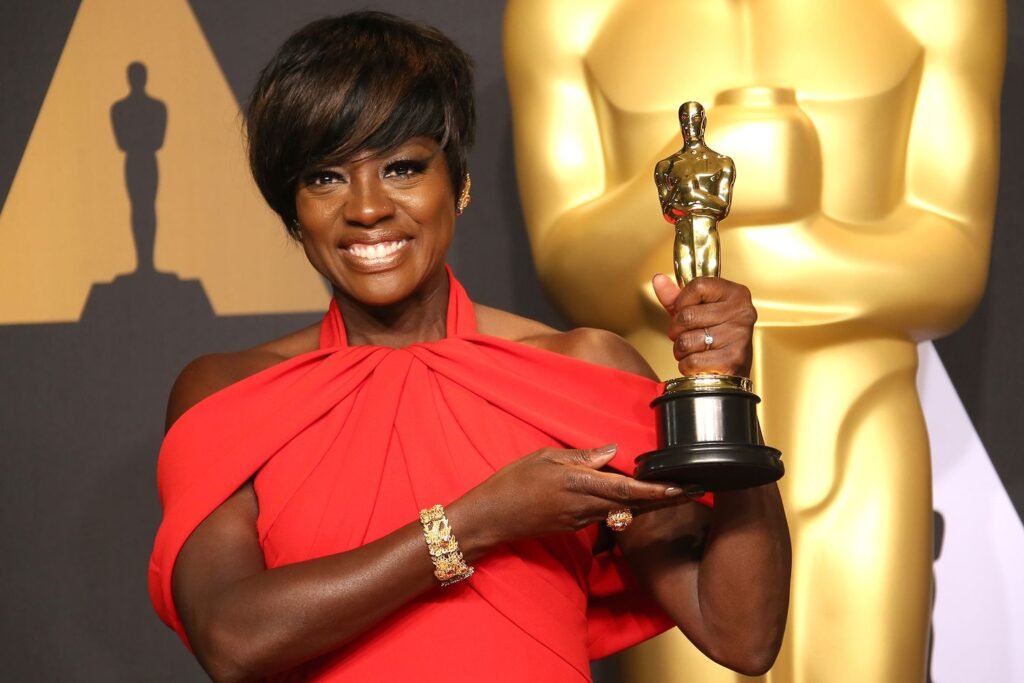
Today, Viola Davis stands among the finest actors of her generation. She is an Academy Award winner, an Emmy Award winner, a two-time Tony Award winner, a producer, and a bestselling author. She is also the first Black actress to complete the Triple Crown of Acting, winning competitive Oscar, Emmy, and Tony Awards. None of this was written into the life she was born into.
Before the applause, she was a little girl in Central Falls, Rhode Island, one of six children. Her parents, Dan and Mae Alice Davis, worked hard, but a large family and little money made daily life a struggle. Their home was in poor condition. Food ran short more often than not, and hardship was simply part of growing up.
Davis has never softened the truth of those years.
“I was the kind of poor where I knew right away I had less than everyone around me. We had nothing.”
For a child, poverty is rarely just about empty pockets. It is the sense of being overlooked, of feeling that life has already set a ceiling on what is possible. Viola Davis carried that weight too.
Then something shifted.
As a young girl, she watched Cicely Tyson play Jane Pittman in The Autobiography of Miss Jane Pittman. It was the first time a performance reached something in her she couldn’t yet name. That moment planted a dream she would spend years chasing.
Acting stopped being something she watched and became something she wanted to do.
She went on to study theatre, giving herself fully to the craft. She earned a Bachelor of Arts in Theatre from Rhode Island College in 1988, where she honed her skills and deepened her commitment to acting. But talent didn’t open doors on its own. Hollywood wasn’t waiting for her.
For years she worked the stage, taking every role she could get in an industry that offered Black women painfully few chances. Auditions often ended in silence or rejection. Recognition was slow. Success felt far away.
Plenty of people would have called the dream unrealistic. Viola Davis didn’t.
Instead of letting rejection define her worth, she used it as fuel to sharpen her craft. She chose excellence over quick recognition, trusting that preparation would eventually meet its moment.
That moment came in 2008. Her performance in Doubt lasted only a few minutes on screen, but it was enough to earn her first Academy Award nomination and put Hollywood on notice. It proved that impact isn’t measured by screen time but by what an actor brings when the camera is finally on them.
The Help pushed her further into the spotlight. As Aibileen Clark, a domestic worker carrying quiet dignity through impossible circumstances, she moved audiences worldwide and picked up a second Oscar nomination.
Then came a role that changed television.
As Professor Annalise Keating in How to Get Away with Murder, Davis delivered a character who was brilliant, flawed, and completely human. The performance won her the Primetime Emmy for Outstanding Lead Actress in a Drama Series, the first Black woman to take that award.
In her acceptance speech, she said:
“The only thing that separates women of colour from anyone else is opportunity.”
It wasn’t just a line for the moment. It was a statement about how much talent goes unseen simply because the door was never opened.
A year later, her role as Rose Maxson in Fences earned her the Academy Award for Best Supporting Actress, a win built on decades of discipline rather than a sudden break.
By then, Viola Davis had become the first Black actress to complete the Triple Crown of Acting. Every trophy carried years of struggle the world never witnessed.
Even at the height of her career, Davis has stayed honest about fear, doubt, and the work of healing.
“You have to be the hero of your own story.”
She has also encouraged people to:
“Dream big and dream fierce.”
But dreaming was never the whole plan. She backed it with preparation, studying relentlessly, taking on difficult roles, staying committed to her craft long before recognition arrived. That mix of vision and discipline is what carried her from Central Falls to the biggest stages in entertainment.
Her story leaves a few lessons worth sitting with.
Where you start is not a forecast of where you’ll end up. The family and circumstances you’re born into don’t set the ceiling on what you can build.
Rejection isn’t always a signal to quit. Sometimes it’s simply asking you to get stronger and more prepared for what’s coming.
Success rarely moves fast. Behind every visible win are years of work nobody saw.
More than anything, Viola Davis’s life shows that the real fight is rarely against poverty or rejection themselves. It’s against the belief that those things get the final say.
They don’t.
The girl who once wondered if she mattered became one of the most respected actors alive, not because life got easier, but because she refused to let go of a dream that started with almost nothing.
Viola Davis’s story makes one thing clear: where you begin can shape the road ahead, but it never has to decide where you end up.
The Brief Network: Inspiring Stories and Empowering Lessons.