


At an age when most people are settling into retirement, Colonel Harland Sanders was starting over again.
He was born in 1890 in Henryville, Indiana, and lost his father at the age of five, which meant young Harland was cooking for his siblings while his mother worked to keep the family afloat. That early kitchen responsibility would prove more useful than anyone could have guessed. But the path there was anything but direct.
Before chicken ever entered the picture, Sanders drifted through more jobs than most people hold in a lifetime. He worked as a farmhand, a railroad fireman, an insurance salesman, a ferry operator, and a filling station attendant, among others. He tried his hand at law and lost that career after a courtroom dispute with his own client. Business ventures failed too. A ferry service he started was made obsolete by a newly built bridge. An oil lamp company he ran collapsed once electricity reached rural households. By the standards most people use to measure success, Sanders had little to show for his first four decades of work.
In the early 1930s, running a gas station in Corbin, Kentucky, he began serving simple meals to travelers passing through. More and more people started coming to eat there. He expanded into a roadside restaurant and spent years refining a fried chicken recipe built around eleven herbs and spices, along with a pressure frying method that cooked the chicken faster without sacrificing flavour. By his early sixties, the business was doing well enough that he assumed it would carry him for the rest of his life.
Then everything changed. A new interstate highway was built, and it redirected traffic away from Corbin. Cars that used to pass right by his restaurant now had no reason to stop there anymore. Customers stopped coming, and within a short time, the business that had taken him decades to build could no longer sustain itself. Sanders had no choice but to sell it, and he sold it for far less than it was worth. He was 65 years old. Instead of retiring with savings and security, he was left with almost nothing and a Social Security check of 105 dollars a month to live on. For most people, this would have been the point to give up. He had spent his whole life building toward something, and in one stroke, it was gone.
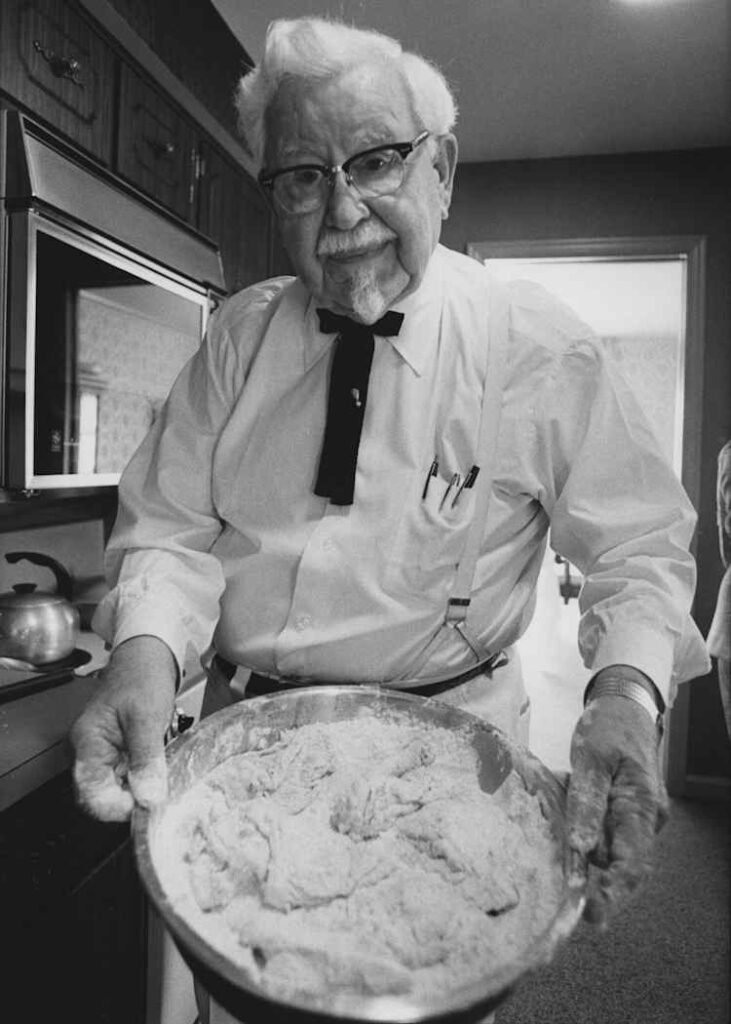
Instead, he got in his car and started driving. He travelled across the country with his pressure cooker and his seasoning mix, cooking chicken for restaurant owners and their staff, often sleeping in the back seat between stops. He is said to have been turned down more than a thousand times before a restaurant owner finally agreed to serve his chicken. But some said yes, and he began signing them on as franchisees, paid on a simple arrangement of a few cents for every piece of chicken sold. One of his earliest partners, Pete Harman in Salt Lake City, is credited with giving the business its name and its now familiar takeout bucket.
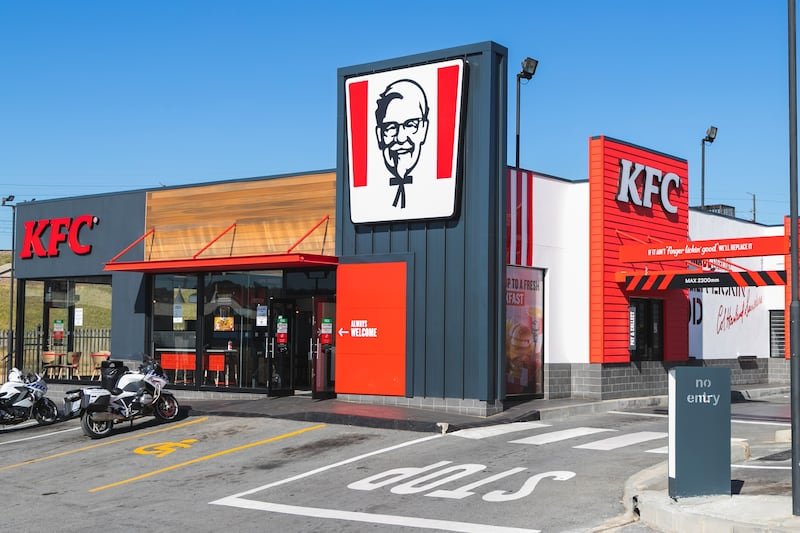
By the early 1960s, Kentucky Fried Chicken had grown to hundreds of locations across the United States and abroad. In 1964, Sanders sold the company for two million dollars, though he never really stepped back. He spent the rest of his life travelling as the face of the brand, inspecting restaurants and insisting that the food meet his standard. He died in 1980 at the age of 90. His face still appears on the KFC logo today, making him one of the most recognisable brand figures in the world. The company he built out of a roadside kitchen now operates more than 25,000 restaurants across over 145 countries.
Sanders never meant to teach anyone anything. He was just trying to survive, but his journey carries lessons of its own.
1. A late start is still a start. Sanders had already lived a full life of failed ventures before fried chicken became his defining work. The years behind him did not disqualify him from beginning again.
2. Loss can be the opening, not the end. Losing the Corbin restaurant felt like the end of everything he had built. It became the reason he franchised in the first place.
3. Persistence is a decision, repeated daily. Sanders faced far more closed doors than open ones on his early franchising trips. He kept driving anyway, one rejection at a time, until a single yes changed everything.
4. Protect what makes your work distinct. His recipe and his insistence on quality were non negotiable, even after he no longer owned the company. That standard is what people still associate with the brand today.
5. Show up as the face of your work. Sanders did not disappear once the business succeeded. He remained visible, accountable, and involved, and that presence became part of the brand itself.
Closing Thoughts
Sanders spent forty years failing at other things before he found the thing he was meant to build. The lesson is not that failure is noble on its own. It is that failure is only the end of the story if you decide it is. He did not have youth, capital, or a safety net at 65. He had a recipe, a car, and the willingness to keep asking.
Success does not run on a clock. It runs on whether you are still willing to knock on the next door.
The Brief Network: Inspiring Stories and Empowering Lessons.