


José Hernández went from picking crops in California’s agricultural fields to looking back at Earth from space. Born into a Mexican migrant farmworking family, he grew up moving between farms as his parents followed seasonal work. Years later, after earning degrees in engineering, contributing to scientific research and facing eleven rejections from NASA, he finally earned a place among the astronauts aboard Space Shuttle Discovery.
His achievement was remarkable, but the years that led to it make his story even more compelling. Hernández had to turn a childhood ambition into a practical plan, build the qualifications to pursue it and keep improving after repeated disappointment. His experience shows what sustained effort can look like when a goal demands far more than enthusiasm alone.
A Childhood Spent Following the Harvest
Hernández spent his early years moving around California as his family followed seasonal agricultural work. As a child, he helped pick crops such as strawberries and cucumbers while balancing school with the demands of farmwork. He did not learn to speak English until he was 12.
His circumstances were a long way from the world of space exploration. Yet, an experience in 1972 would introduce him to a possibility that stayed with him for years.
That year, he watched television coverage of the Apollo 17 Moon mission with his family. Seeing astronauts travel beyond Earth made a lasting impression on him. What began as childhood fascination gradually developed into an ambition he would carry into adulthood.
Having a dream, however, was only the beginning. He would need an education, technical knowledge and years of preparation to give that ambition a realistic chance.
Turning an Ambition into a Plan
Hernández pursued electrical engineering at the University of the Pacific in California before earning a master’s degree in electrical and computer engineering from the University of California, Santa Barbara.
He went on to work at Lawrence Livermore National Laboratory, where his research included technologies related to X-ray lasers and the development of digital mammography systems used to support early breast cancer detection.
These achievements reveal an important part of his story. While pursuing his ambition of becoming an astronaut, Hernández was already building a career in science and engineering, gaining experience and contributing to important research.
He was not waiting for his dream to come true before taking his next step.
He was building the knowledge and experience that could bring him closer to it. Each stage of his education and career gave him skills he could draw on as he continued pursuing his goal.
Ambition gives a person somewhere to go, but preparation helps make the destination possible.
Eleven Rejections, but No Final Answer
Hernández applied to NASA’s astronaut programme and was rejected eleven times before he was selected on his twelfth attempt in 2004.
For anyone pursuing a difficult goal, eleven rejections might seem like a clear signal to stop. For Hernández, however, each unsuccessful application became an opportunity to examine what he could improve.
He studied the backgrounds of astronauts who had been selected and identified skills he could develop. He earned a pilot’s licence, obtained scuba-diving qualifications and expanded his experience. He also learned Russian, a useful skill for working in international space operations.
His approach was practical. Instead of treating rejection as proof that he could never succeed, he looked for ways to strengthen his candidacy.
Eleven rejections did not end his pursuit. They gave him reasons to prepare differently.
This does not mean that persistence guarantees success or that every rejected opportunity is worth pursuing indefinitely. It means that, when a goal remains important and achievable, a setback can provide information that helps a person make a better attempt.
Hernández’s experience shows that perseverance is more than repeating the same action. Sometimes, it means changing your approach, developing new skills and becoming better prepared for the next opportunity.
The Day the Dream Became Reality
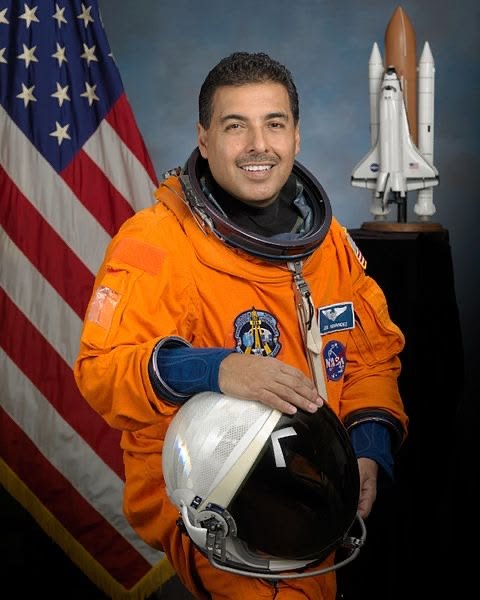
In 2004, NASA selected Hernández as part of its nineteenth astronaut class. He completed astronaut training and, in August 2009, travelled into space aboard Space Shuttle Discovery on mission STS-128.
The mission took the crew to the International Space Station, where they delivered supplies and equipment and supported the station’s continuing operations.
For Hernández, the flight represented the culmination of a childhood ambition that had survived years of preparation and repeated disappointment. The journey from working in agricultural fields to orbiting Earth was extraordinary, but it was not a sudden leap from one life to another.
It was the result of education, professional experience, deliberate preparation and a willingness to keep improving after rejection.
His achievement also carried a wider message for young people who may struggle to imagine themselves in fields where they rarely see people with backgrounds like theirs. A person’s beginnings do not have to determine the full extent of their ambitions.
The Work Behind the Dream
Hernández’s story offers several ideas worth carrying into everyday life.
First, take your ambitions seriously enough to prepare for them. Wanting a particular career or outcome is a starting point. Learning the necessary skills, seeking experience and understanding the demands of the opportunity are what help turn that ambition into a plan.
Second, let rejection prompt reflection. Disappointment is real, and not every setback has an obvious solution. But it is worth asking what an experience can teach you, what needs to change and whether another attempt makes sense.
Third, invest in skills beyond the minimum requirement. Hernández did not rely on his engineering qualifications alone. He continued developing abilities that could strengthen his application. In any field, a willingness to keep learning can open possibilities that were previously out of reach.
Finally, recognise that progress can happen before the final breakthrough. Hernández was already building a meaningful career in engineering before NASA selected him. The years spent gaining knowledge and contributing to scientific research were not wasted simply because he had not yet reached space.
Ambition gives a person somewhere to go, but preparation helps make the destination possible.
His story encourages us to value the person we are becoming while working towards the goal we hope to achieve.
Hernández’s remarkable journey also inspired A Million Miles Away, a 2023 biographical film starring Michael Peña. The film brings his experiences to the screen, from his childhood in a migrant farmworking family to his eventual achievement as a NASA astronaut. It offers another way to encounter a story shaped by ambition, preparation and persistence.
A Dream Worth Preparing For
José Hernández’s journey from migrant farmworker to NASA astronaut was built on years of learning, preparation and persistence. After eleven rejections, he did more than hope for a different outcome. He worked to become a stronger candidate.
Not every ambition will unfold as planned, and some goals may require a different path. But Hernández’s story reminds us that rejection does not have to be the end of the road.
Ultimately, the distance between where we begin and where we hope to be is bridged by the work we put in when no one is watching.
The Brief Network: Inspiring Stories and Empowering Lessons.