

When Dr. Omolola Salako started Sebeccly Cancer Care in 2006, she wasn’t executing a carefully mapped-out plan to build an ecosystem of cancer-care organisations. She was responding to something deeply personal.
Three years earlier, she had cared for her younger sister during her battle with kidney cancer. The experience was painful enough that she wasn’t initially certain she wanted to dedicate her career to oncology.
But something began to change as she volunteered in cancer-care institutions and NGOs. At the time, she says, Nigeria had fewer than 30 oncologists. She felt a nudge to become one of them.
In 2006, she established Sebeccly Cancer Care to provide supportive care to cancer patients and their family caregivers.
Twenty years later, that first step has grown into something much bigger. But according to Dr. Salako, there was never a complete roadmap.
“Looking back, I didn’t have a clear roadmap, but I always followed my heart.”
What she did have was an approach to problems.
“I believe in creating practical solutions and generating knowledge to solve problems.”
And so she learned to identify particular problems, analyse them and experiment with practical ways of solving them. Not every problem could be tackled. But when a problem was particularly disturbing and a practical solution appeared possible, she and her team went to work.
One problem at a time
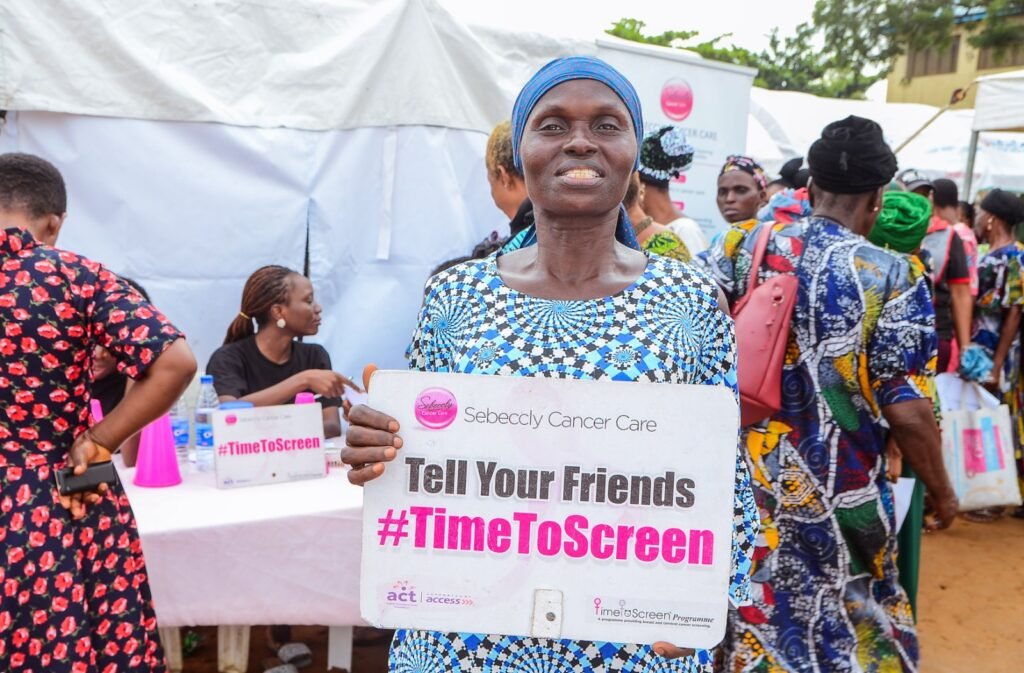
One of those problems was access to breast and cervical cancer screening.
The response became Time-to-Screen, Sebeccly’s flagship women’s cancer screening programme. Through a partnership with ACT Foundation, Salako says the programme has provided free screening and treatment to more than 35,000 women across 100 communities.
Another challenge was the myths and misconceptions surrounding cancer prevention.
That led to initiatives including the 12K LLP Guinness World Record attempt, the Cancer on the Street podcast and community cancer outreaches.
More recently, the organisation identified another problem: cancer patients needing financial assistance and the challenge of ensuring that public generosity reaches people with genuine medical needs. The response is Kind Gifts, a medical crowdfunding platform being developed to verify funds received before disbursing them to patients requiring financial assistance.
Different problems. Different solutions. But the same underlying approach.
“Today, the problems we are solving are centered around people’s needs and what the community needs.”
The ecosystem wasn’t the original plan
When asked whether she always envisioned building these different organisations – Sebeccly Cancer Care, Oncopadi and Pearl Oncology Specialist Hospital, her answer is straightforward:
“The simple answer is no.”
There were, however, clues. She remembers being entrepreneurial from childhood, selling sweets and clothes and later launching a profitable business centre while at university.
Then came September 6, 2006. On her way out of Akwa Ibom, Salako says she had a divine vision of creating a place where cancer patients would be cared for. Initially, she understood that vision to mean an NGO. Over time, her understanding expanded.
She began to see what she describes as a sanctuary integrating different dimensions of a patient’s life – from spiritual care and relationships to financial and emotional support, recovery and rehabilitation – within comprehensive cancer treatment.
The next pieces would reveal themselves gradually. While practising as an oncologist, she noticed something during one particular clinic day. Many of her patients walked into the clinic holding their phones. It triggered what she describes as a eureka moment.
What if cancer patients could use technology to improve their outcomes?
That question led to the birth of Oncopadi in 2017. Fourteen years after the vision she had in 2006, she says the time finally felt right to launch Pearl Oncology Specialist Hospital.
Along the way, her work with patients continued to generate other ideas.
The GIFTS framework, which she began using to counsel patients at Sebeccly in 2012, eventually became the book GIFTS of Survivorship: You Are Bigger Than Cancer.
Then, in 2026, the Oncopreneurs Multi-Cooperative Society was formed with the goal of creating wealth among its members, including through investment in cancer care, cancer specialists and new cancer ventures.
What now looks like an ecosystem emerged one solution at a time.
“I didn’t set out in the beginning to develop an ecosystem.”
Instead, she says she remained focused on strengthening cancer care through innovation, partnerships and, perhaps most importantly, consistency.
Her description of entrepreneurship is particularly revealing:
“For many entrepreneurs like myself, it’s never clear in the beginning.”
But she adds:
“When you honor the assignment of today, even though it gets tougher, it also gets easier. And you reap the fruits of your labour.”
Sometimes you have to step outside the system to improve it
Dr Salako has worked across public and private healthcare, research and biotech companies, and the social sector. She has experienced the system as a clinician, researcher, advocate and entrepreneur. Being inside clinical care showed her the everyday challenges faced by cancer patients, and the sacrifices demanded of the specialists caring for them. It also taught her the importance of institutions, standards, regulation, research, professional networks and the decades of knowledge embedded within established systems. But being inside a system can also expose its limitations.
“Innovation is always ahead of tradition.”
For Salako, that creates a tension innovators must learn to navigate. You need the system. You need its knowledge. You need collaboration with clinicians, researchers, policymakers, advocates and other stakeholders. But there may also come a point when solving a problem requires building differently.
“Every innovator has to decide at what point they want to build differently and step away from the system.”
The answer, she argues, is not in abandoning the system entirely but in knowing when to remain grounded within it and when to step outside it long enough to create something that can ultimately benefit it.
Twenty years of not giving up
On September 6, 2026, Sebeccly Cancer Care turns 20. On this she says:
“I’m most proud that I never looked back and I never abandoned Sebeccly, even though there were moments when it was tempting to do so.”
The early years weren’t easy. There were periods when donations and runway disappeared. She was encouraged to shut Sebeccly down and concentrate on becoming a cancer specialist. She refused.
“No pressure could stop me from believing in Sebeccly.”
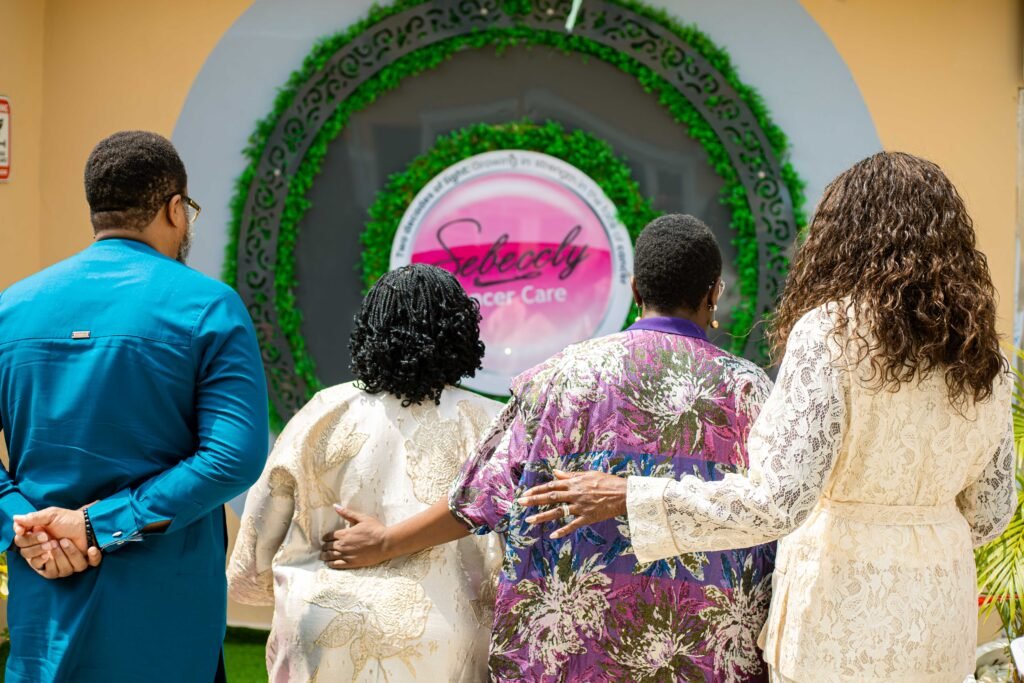
The experience became an education in entrepreneurship. Sebeccly taught her, she says, about starting with nothing, believing in an idea, managing limited resources, attracting more resources and transforming passion into processes. It also taught her that impact without sustainability can eventually undermine the very people you’re trying to help.
She learned that lesson through a patient-access programme offering a particular cancer drug at a discounted rate. As patients appealed for more assistance, she and her team began providing the drug free to those who couldn’t afford it. Eventually, they had donated about 60% of the drugs. It felt like impact. But there was a problem.
The programme wasn’t generating enough money to purchase the next order.
Eventually, it ended. And when patients subsequently needed the drug at a discounted rate, the programme could no longer help them either. The experience changed the way she thought about doing good.
“Whilst it’s important to provide the solution, it’s equally important to sustain it.”
That lesson would influence what came next. Rather than thinking about Sebeccly only as an NGO dependent on donations, the organisation began serving as a launchpad for other ventures.
- Oncopadi Technologies followed in 2017.
- Pearl Oncology Specialist Hospital followed in 2021.
Other initiatives followed.
And today, Sebeccly is working towards establishing its permanent site. Twenty years after starting, Salako says:
“We are stronger as a foundation. We have more assets, and whenever I step down from Sebeccly’s management, which is very soon, Sebeccly will outlive me abundantly.”
20 years and the next 1,000
Sebeccly is marking its 20th anniversary – 20 in 26 – as a launchpad for what comes next.
The initiatives include the Naija Cancer Watch Fellowship (NCWF), a three-month programme designed to improve evidence-based cancer reporting and public-health storytelling; KindGifts, the medical crowdfunding platform; and the P.O.W.E.R Conference, focused on prevention, oncopreneurship, women’s health, emerging technologies and research.
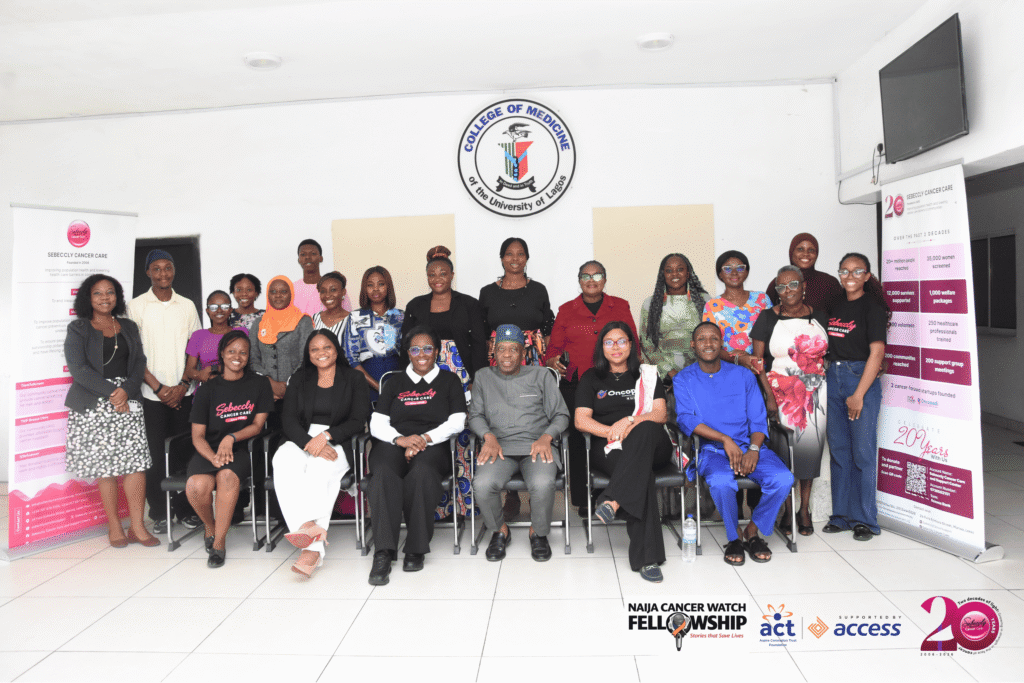
There is also the Oncopreneurs Collective: Its ambition is significant: identify and mentor the next 1,000 oncopreneurs and cancer specialists who can build the systems and institutions required for sustainable healthcare delivery.
After 20 years of building, perhaps this is the natural next chapter.
The woman who began by trying to solve problems herself is now thinking about the people who will solve the problems after her. And perhaps that is one of the most interesting things about her journey.
She began with an assignment she believed mattered. Then she kept showing up. One problem revealed another. One solution created the foundation for another. Experience sharpened the vision. And what once looked like separate projects gradually began to reveal a much bigger picture. As she puts it:
“Ultimately, the blueprint is divinely inspired; my real job is to execute it with faith.”
Twenty years later, she is still executing. But increasingly, she is also building the people, ventures and institutions that can continue long after she steps away.
The Brief Network: Inspiring Stories and Empowering Lessons.