


Agricultural losses do not always happen in the field. Grain that has been harvested can still be damaged during storage if it contains too much moisture. For farmers, this can mean losing produce they have already spent time and money growing.
In Ghana, this problem presented an opportunity for Isaac Sesi, an electrical engineer who was working as a research engineer at Kwame Nkrumah University of Science and Technology (KNUST).
His work on a grain moisture meter led to the development of GrainMate, a device designed to help farmers measure the moisture content of their grain before storage. In 2018, he founded Sesi Technologies to take the product beyond university research and into the market.
The decision marked the beginning of a business that would have to contend with the realities of manufacturing, financing and getting farmers to adopt a new technology.
From Research to a Commercial Product
Before GrainMate became a commercial product, it was a research project aimed at addressing post-harvest losses.
Sesi was part of a team working to develop an affordable grain moisture meter that could be manufactured locally. The need was practical. Some farmers estimated moisture levels by biting or tossing grains because suitable measuring equipment was expensive or difficult to access. These methods could lead to inaccurate assessments and unsafe storage conditions.
GrainMate offered a more reliable way to measure moisture content in grain, helping farmers make informed decisions before storing their produce.

For Sesi, the project presented an opportunity to put engineering research to practical use.
“I decided this project wasn’t going to end as another academic project.”
He established Sesi Technologies in March 2018 to commercialise the technology. The decision meant taking responsibility for more than developing a working device. The company also had to manufacture it, find customers and establish a way to generate revenue from its sales.
The Cost of Taking Technology to Market
Building the product was one challenge. Financing its production was another.
Reflecting on the company’s early financial difficulties, Sesi said:
“We started with no money, absolutely no money.”
The company secured pre-orders from a customer who paid 70 per cent upfront, allowing the team to finance the initial inventory needed to fulfil the order. This arrangement helped Sesi Technologies move forward without having all the production capital available at the outset.
It also illustrates a practical difficulty for hardware businesses: a product may have a willing customer, but the company still needs money to manufacture and deliver it.
The team faced other challenges. In his account of the company’s early years, Sesi acknowledged that they had limited experience in electronics manufacturing, set unrealistic production timelines and overpromised to clients. He also wrote about becoming distracted by pursuing too many activities and nearly running out of cash several times.
These problems affected the company’s ability to manage production and meet its commitments. They were reminders that developing a useful product does not automatically create a well-run business.
The Question of Scaling
In 2019, Sesi Technologies was producing a few hundred GrainMate units every couple of months at its facility in Kumasi. During a conversation with an investor, Sesi was asked a question that challenged his growth plans:
“What’s your plan to scale from 200 units to 200,000 units?”
Until then, he had focused on refining the product and fulfilling orders. Scaling, however, required a broader plan for manufacturing, supply chains, logistics and distribution. Selling more units would mean little without the capacity to produce and deliver them reliably.
Having a product that solves a problem is only the beginning. Building the capacity to deliver it at scale is what turns an innovation into a sustainable business.
Sesi Technologies later expanded beyond GrainMate into post-harvest services, including drying, threshing, storage and market access. The company also developed FarmSense, a soil intelligence solution designed to help farmers make informed decisions about soil conditions and crop production.
In 2019, Sesi was named one of MIT Technology Review’s Innovators Under 35 for his work in agricultural technology.
His experience highlights a key challenge for entrepreneurs: developing a useful product is one achievement; building a business that can deliver it consistently and grow sustainably is another.
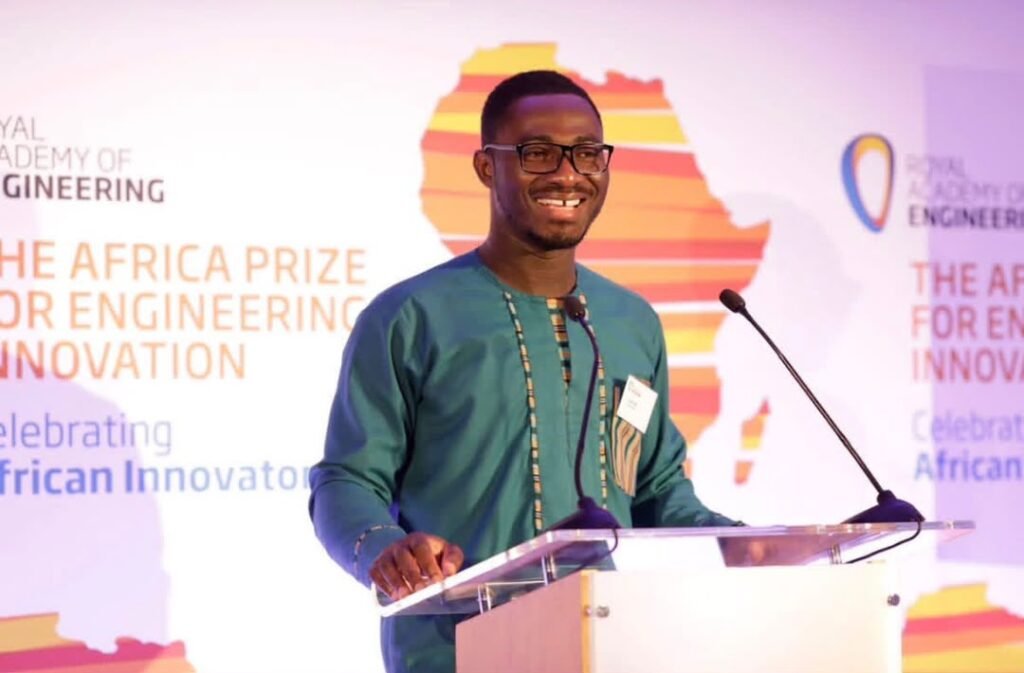
The Business Behind the Technology
Isaac Sesi’s experience with GrainMate demonstrates the work involved in turning an engineering solution into a commercial enterprise. Identifying a problem and developing a useful product are important first steps, but manufacturing, financing, customer relationships and planning for growth determine how effectively that solution can reach the market.
For entrepreneurs, the central takeaway is straightforward: solving a problem creates an opportunity, but building a sustainable business requires a plan for delivering that solution consistently.
The Brief Network: Inspiring Stories and Empowering Lessons.