


By the time most people begin wondering whether they have achieved enough, Morgan Freeman was still building his acting career.
He had spent years on stage. He had appeared on television. He had taken small film roles. He had worked, waited and continued to develop his craft while the kind of recognition many actors dream about remained out of reach.
Then, when he was in his 50s, his career began to change dramatically.
In 1987, Freeman earned his first Academy Award nomination for Street Smart. Two years later, Driving Miss Daisy and Glory further established him as one of Hollywood’s most respected actors. More than a decade later, at the age of 67, he won the Academy Award for Best Supporting Actor for Million Dollar Baby at the 77th Academy Awards in 2005.
To many people, it looked like Morgan Freeman had finally arrived. But Freeman saw it differently.
“My success started for me when I got my first job on a New York stage. I was successful. I’d arrived. From now on, it’s just one step at a time. Keep working.”
That may be the most important part of his story.
Because Morgan Freeman’s journey is not really about a man who became successful late. It is about a man who refused to measure his success only by how quickly the world noticed him.
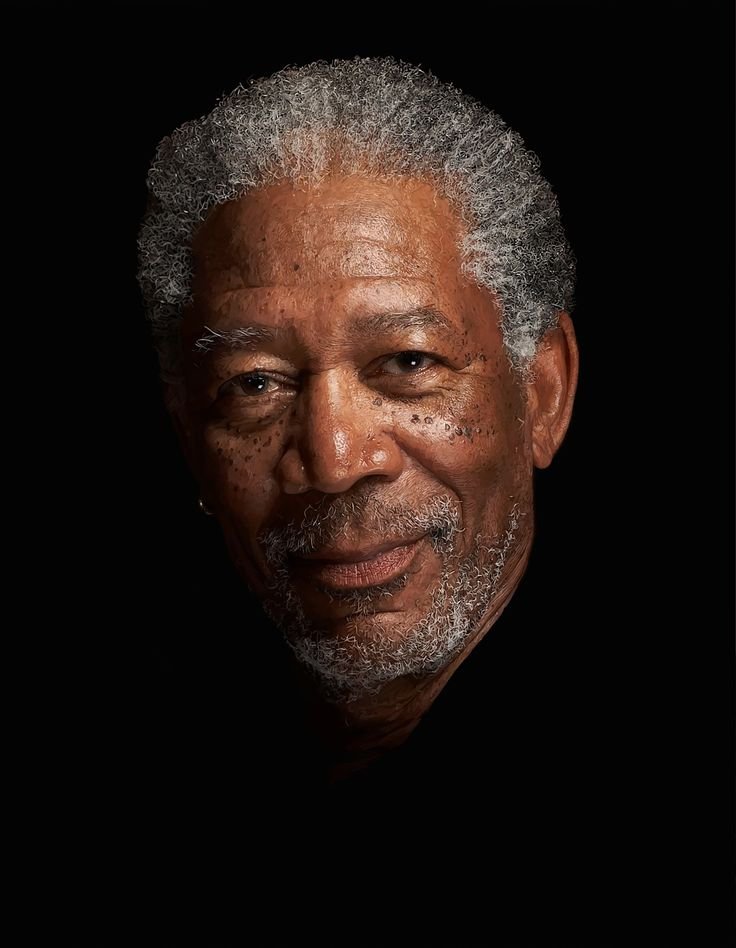
Freeman was born in Memphis, Tennessee, in 1937 and spent much of his childhood in Mississippi. His interest in acting appeared early. At about 12, he participated in a school drama competition and won at the statewide level. His teachers encouraged him, and acting became something he could imagine himself doing professionally.
But his journey did not immediately lead to Hollywood.
After high school, Freeman joined the United States Air Force, initially with the ambition of becoming a fighter pilot. He eventually realised that flying was not what he truly wanted.
He left the Air Force after several years and moved to Los Angeles, where he struggled financially. He found work as a transcript clerk at Los Angeles City College and continued developing himself through acting, voice and diction.
It was another chapter that did not look particularly glamorous. But he was learning.
Freeman eventually moved into professional theatre. He worked his way through stage productions, including Broadway and off-Broadway performances. He also spent years on television, becoming known to children across America as Easy Reader on The Electric Company, where he appeared in hundreds of episodes.
He was working. He was gaining experience. He was becoming better. But he was not yet the Morgan Freeman the world would eventually know.
And that distinction matters.
Because when we look at successful people, we often focus on the moment their lives changed. We rarely talk about the years when they were doing the work without receiving the recognition.
Freeman spent decades in that space.
In Hollywood, 50 might seem late to be waiting for your major breakthrough. But that was when Freeman’s career entered another level.
In 1987, he appeared in Street Smart, playing a character very different from the dignified roles audiences would later associate with him. His performance earned him his first Academy Award nomination.
Around the same period, he starred in the stage production of Driving Miss Daisy, a role he would later reprise in the film. The following years brought Glory, Lean on Me, The Shawshank Redemption, Unforgiven, Se7en, Amistad and many others.
The actor who had spent decades working without being a household name had become one of the most recognisable faces and voices in cinema. And it did not stop there. In 2005, at 67, Freeman finally won an Academy Award for his performance in Million Dollar Baby.
But even then, he did not seem interested in treating success as the end of the journey.
There is a beautiful difference between how the world viewed Freeman’s career and how Freeman viewed it.
The world saw a late breakthrough. Freeman saw a career that had been progressing one opportunity at a time.
When asked about the fact that success came late, he offered an answer worth remembering:
“My feeling is that all things happen in their own time.”
That is a difficult idea to embrace in a world obsessed with timelines. We are constantly shown people who appear to be succeeding early.
Someone launches a company at 22. Someone wins an award at 25. Someone becomes famous at 27. Someone seems to have their entire life figured out before they have even reached 30.
It can make you look at your own life and wonder whether you are falling behind.
Morgan Freeman’s story offers another possibility.
Maybe you are not late. Maybe you are still becoming.
It is tempting to look at Freeman’s career and say that everything changed when he turned 50.
But that would miss the point.
He didn’t become an actor at 50. He had been acting for decades. The discipline, experience and confidence that made his later performances so powerful were developed long before the major awards arrived.
His breakthrough was not the beginning of his preparation. It was the moment when preparation met opportunity.
And Freeman himself has suggested that his late rise may have worked in his favour. Looking back, he said he was fortunate not to have become a major success too early, because he might not have handled it the same way.
“It comes when it comes.”
There is freedom in that mindset.
You do the work. You improve. You keep showing up. And you allow the timing of the results to be what it will be.
The Brief Network: Inspiring Stories and Empowering Lessons.