


Meet Mira Mehta, the founder who saw opportunity where others saw what had become normal, and chose to build something that would go on to change thousands of lives.
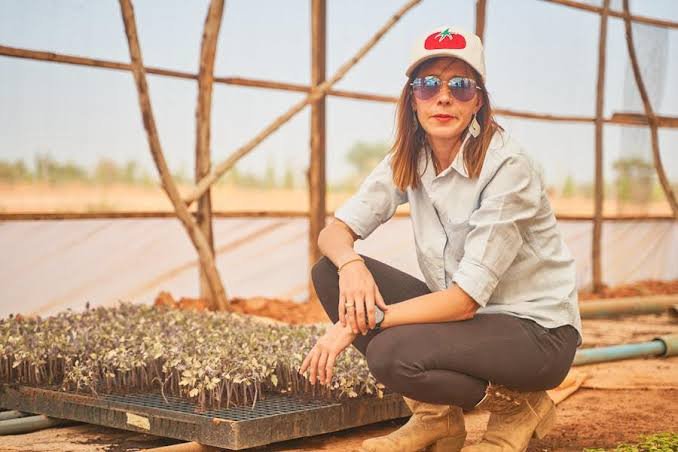
It began, as many significant stories do, with something ordinary, so ordinary that most people would walk past it without a second thought. For Mira Mehta, that “ordinary” was tomatoes.
She was working in finance just outside New York. The pay was good, and everything looked set. But something about it didn’t sit right. Staying would have meant continuing in a life she didn’t really believe in, so she left.
She applied to a healthcare nonprofit, where she was asked during the interview if there was anywhere she would refuse to go. She did not hesitate in her response. That openness led her to Nigeria in 2008 with the Clinton Foundation, into a life she had not planned. At the time, she did not know that decision would eventually become the foundation of a company worth over $18 million.
While working across northern Nigeria, visiting health clinics for the Clinton Health Access Initiative, Mehta noticed something she could not explain. She saw a glut of tomatoes lining the side of the road. The quantity of rotting tomatoes was so great that the road resembled a red carpet.
These tomatoes were drying by the roadside as a result of the annual market glut in Nigeria, which forces farmers to sell at very low prices. And yet, the country was spending hundreds of millions of dollars importing tomato paste, buying from abroad what was literally rotting beneath the open sky at home. Nigerian farmers produced about 65% of the tomatoes grown in West Africa, but the system in between remained broken.

The paradox stayed with her. She went to Harvard Business School, built a life, and still could not let it go. In 2014, she moved back to Nigeria and founded Tomato Jos. The name is derived from an Igbo term of endearment used to describe someone who is exceptionally clean, fresh, and beautiful. Starting with a $25,000 prize, she turned that observation into a business, raising over $18 million to build a tomato processing plant in Kaduna, Nigeria.
But the business was never simply about processing. Mehta understood early that a factory without a reliable supply of quality tomatoes is just an expensive building, so before the plant, she built the farm network. Today, Tomato Jos works with over 3,000 partner farmers, providing training, improved seeds, fertiliser, and access to credit along with a guaranteed, fair-price market for their crops. That guarantee changes everything for farmers who once watched their harvests go to waste.
The impact is clear. Yields are now up to seven times the national average, and incomes have risen significantly allowing farmers to invest in businesses, equipment, and long-term stability. The program continues to prioritise women and young people, groups often underserved in Nigerian agriculture.
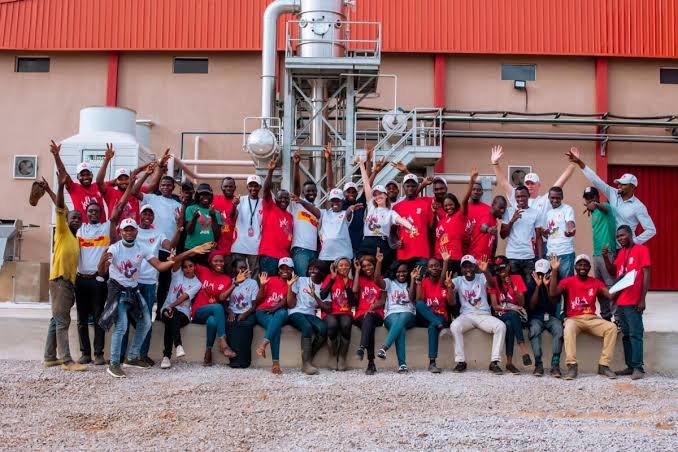
“I always say Nigeria chose me,” Mehta has said. But what she built after being chosen was entirely deliberate. She looked at what others had long accepted and chose to challenge it, seeing not a normal condition but an unsolved problem, and something worth building around.
That shift in perception is perhaps the most important part of her story. Not the $18 million, the processing plant, the distribution network, or the farmer income statistics, those are the outcomes. The origin was a decision to see differently, to look at inefficiency that had become familiar and refuse to accept it as permanent. Tomato Jos now sells across Lagos, Abuja, Port Harcourt, and Benin, remaining focused on strengthening its domestic foundation before looking outward.
Three Things Worth Taking With You
1. Discomfort is information, not weakness. Mehta left a stable career not because she had failed, but because she was honest with herself. When something feels persistently wrong despite looking right on paper, that feeling is worth listening to.
2. Familiarity is not the same as normalcy. Everyone around those rotting tomatoes had accepted the situation as simply how things worked. Mehta was the one who refused that framing. The most overlooked opportunities often hide inside problems that have been accepted for so long they no longer look like problems.
3. The size of your start does not define the size of your vision. Tomato Jos began with a $25,000 prize. The ambition was always larger than the opening cheque.
Sometimes, the difference between what is ordinary and what is valuable is simply the decision to see it differently, and to build where others have learned to look away.
The Brief Network: Inspiring Stories and Empowering Lessons.